Estimate the Animal’s Overall Size
Start with what you can see from a safe distance; do not approach or handle the animal to get a better look. A rat vs. mouse check begins with overall scale: compare the body with a familiar object in the same view, such as a floor tile or storage bin. Rats tend to look more substantial, while mice are smaller. In a South Bend home, note the estimate and room before moving on to more specific features.
Next, look at the outline rather than relying on color, which can be hard to judge in dim light. A rat generally has a heavier build and a thicker, longer-looking tail; a mouse appears finer and more delicate. If you saw the animal only briefly, those proportions may be unclear, especially when it was moving or partly hidden. Record what stood out without forcing a definite identification. The pros we connect you with can use those observations when assessing the report.
Compare Droppings from a Distance
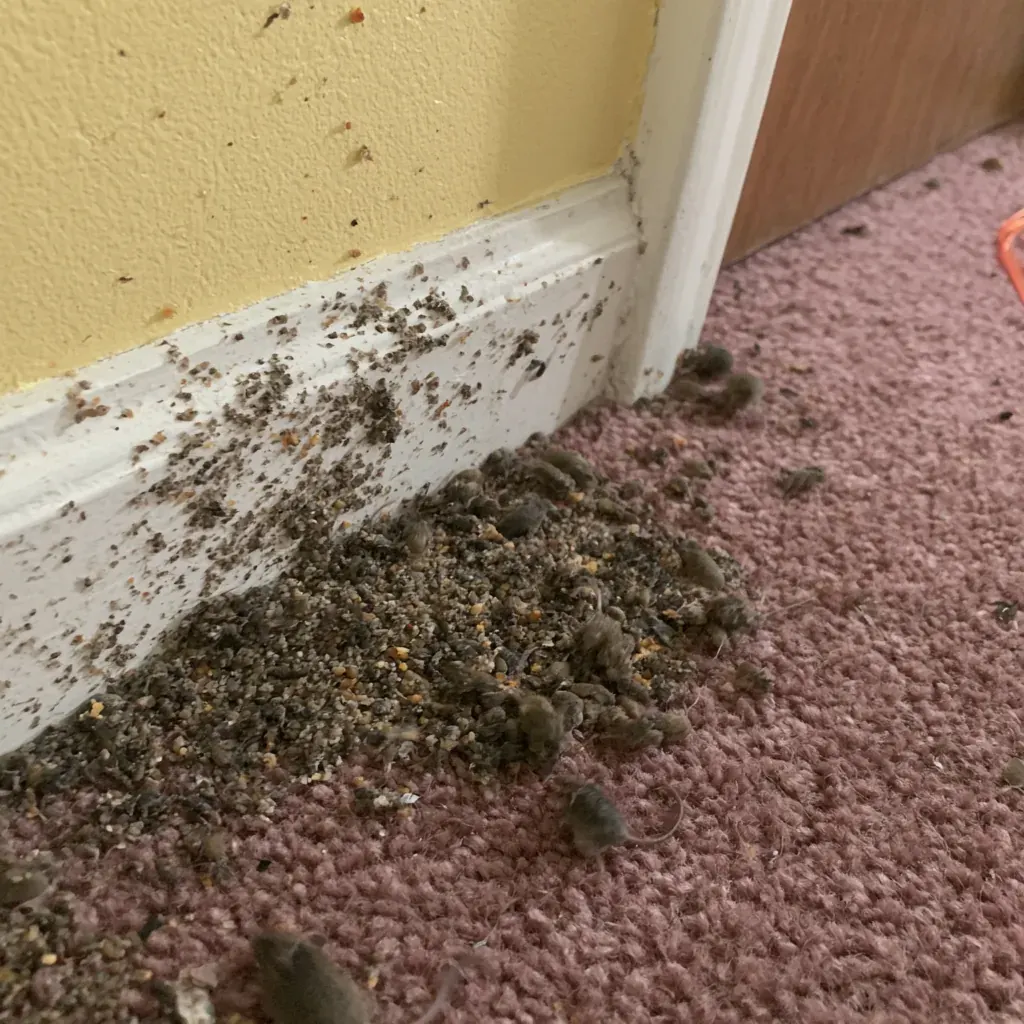
Check any droppings you can see without touching them. Their relative size can support an identification: rat droppings are typically larger than mouse droppings. A lone piece may be difficult to judge, so compare several only from a distance and note whether they seem alike in size. In South Bend, write down the room and surface where you noticed them. That record gives an assessor useful context without treating one clue as proof.
Then record where the evidence sits in relation to food storage, walls, or a quiet corner. These details describe the setting, not the species by themselves. For instance, note whether signs were in a kitchen cabinet area or along a basement wall, and whether the suspected animal was seen there too. Keep the description factual: location, approximate size, and what you observed. A clear account makes it easier to compare clues during an assessment.
Note Gnawing and Other Activity
Look for gnawing on wood, packaging, or other surfaces, and note any nesting material you can see without disturbing it. These marks can help show that rodents have been active, but they do not tell you whether the animal was a rat or mouse on their own. In a South Bend house, write down the object and room rather than guessing from the damage. That keeps the activity check separate from the size check.
Listen for sounds and note when and where you heard them; do not open a wall or move stored items to investigate. Scratching or movement can help point to an active area, but sound alone cannot identify the animal. If the sighting was near a familiar landmark, such as Rum Village Park, use that only as a location reference for your home—not as evidence of rodent activity. Keep the observation tied to your property and what you actually noticed.
Record the Sighting for Assessment
Before seeking an assessment, put the checks together in order: estimated body size, visible build and tail, relative droppings size, then the location and type of activity signs. A brief glimpse can leave important features hidden, so it is reasonable to report uncertainty instead of choosing rat or mouse too soon. In South Bend, a note that places the sighting near Leeper Park may help orient the visit, while the details inside your home guide the identification.
Share the room, time of sighting, approximate scale, and any nearby signs with the pros we connect you with. If you are near Potawatomi Park, you can mention it as a general location marker, then describe the exact part of your home where you saw activity. Do not fill gaps in the account with assumptions. When the animal was seen only in passing, an on-site review may be needed to weigh the signs together and clarify what can be identified.
Dealing with rodent activity in your home?
Note which areas you have checked before deciding how to proceed. Ask what information is useful when checking whether a visit is available. Avoid stirring up dust if you clean contaminated material. Ask the pros we connect you with whether they serve your address; if you are asking about Baugo Creek, Osceola, or Niles, confirm that too. Check visit availability, timing, and any charges directly with them.